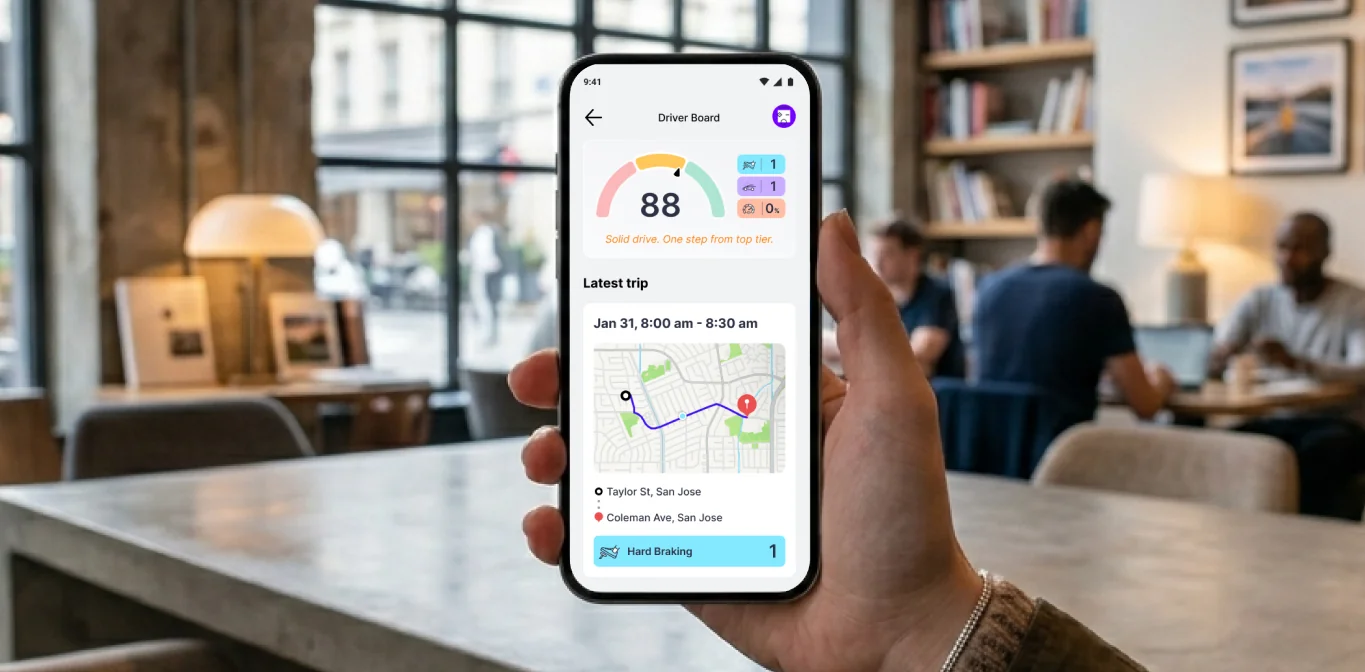
An insurance app built around how you drive
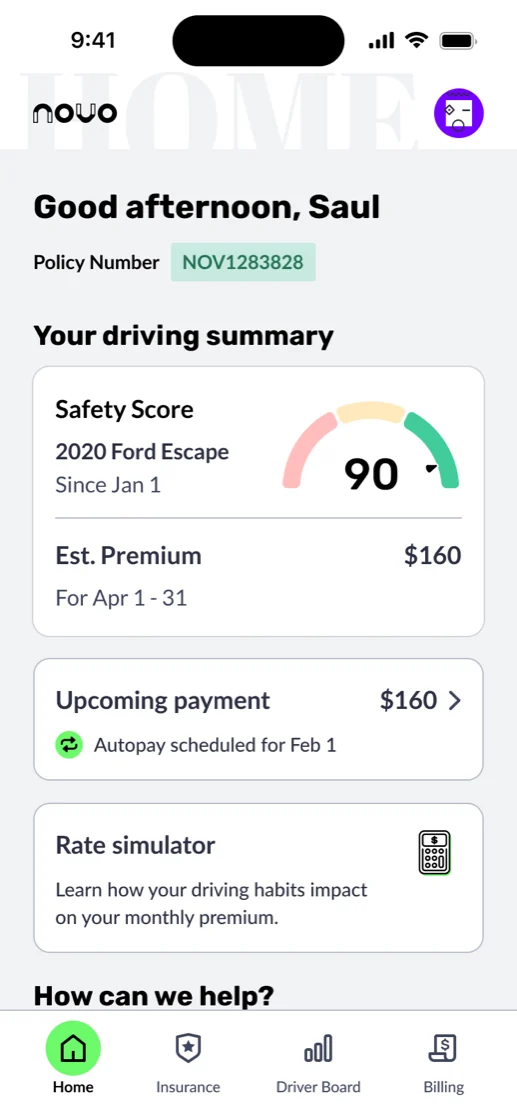
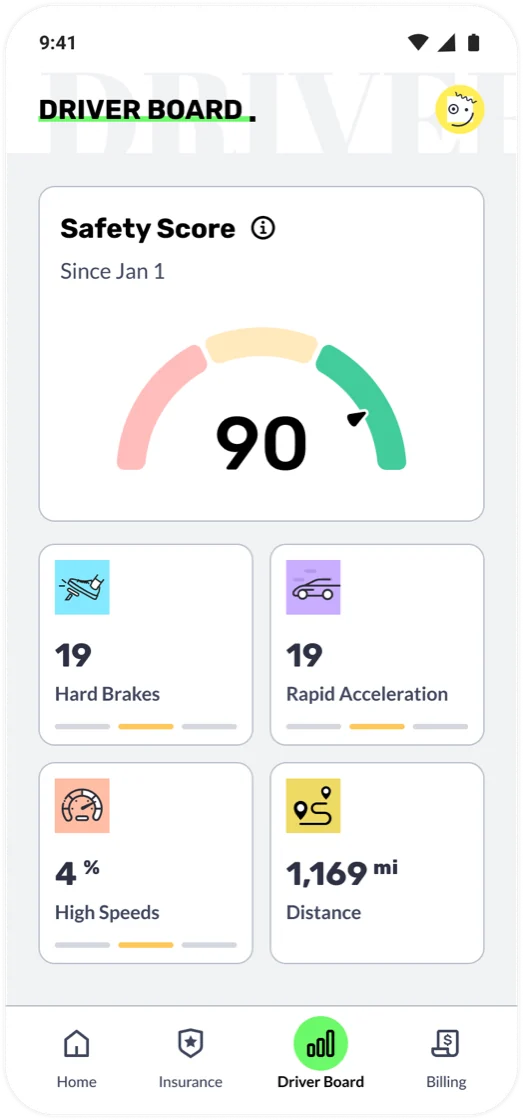
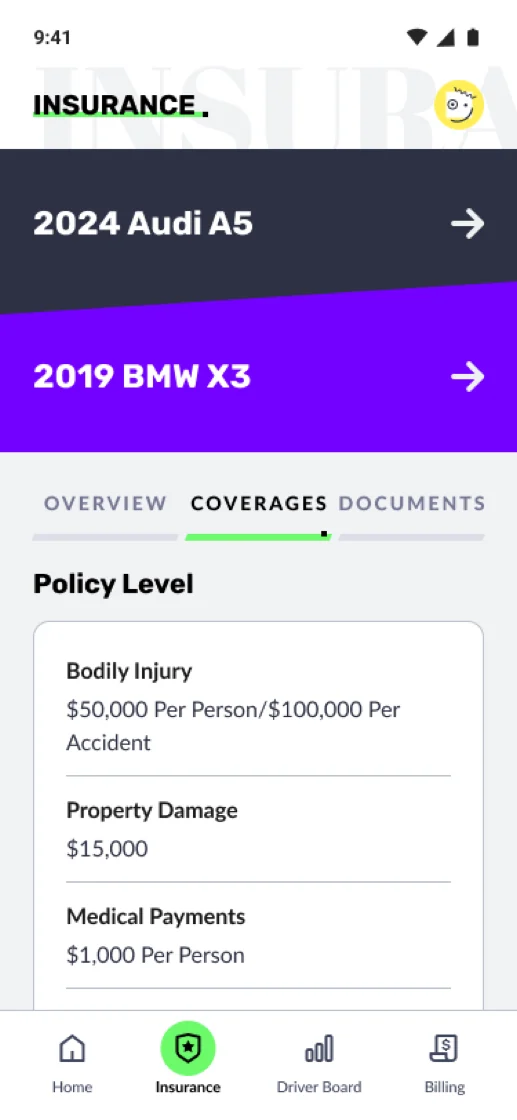
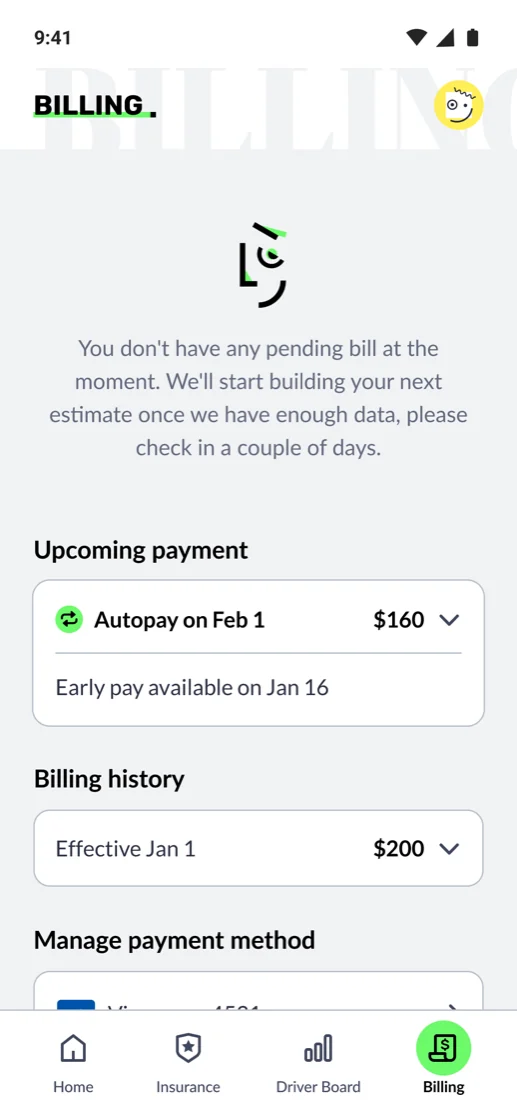
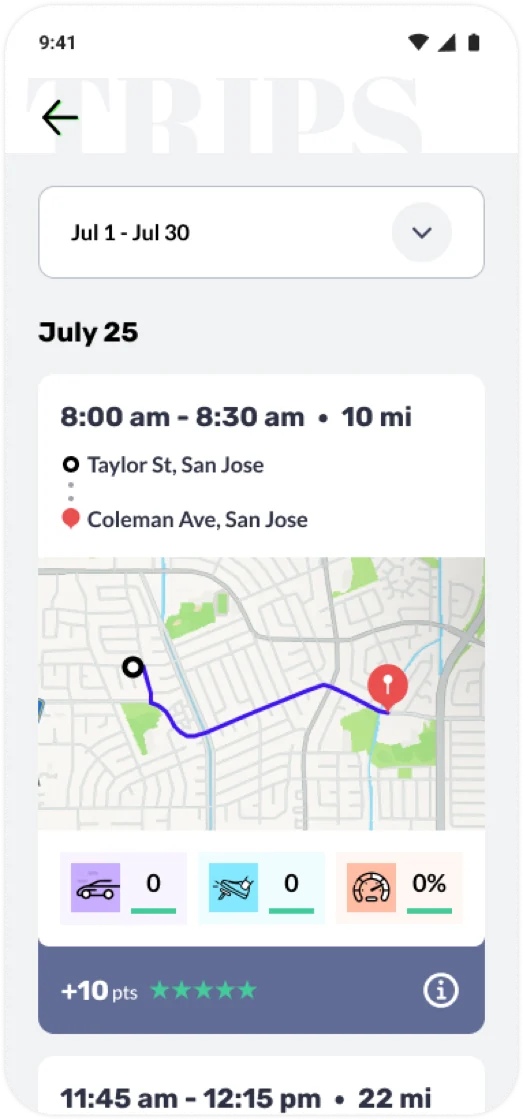
The Novo Driver App is the policyholder's core experience. Telematics data tracks real driving behavior, hard braking, rapid acceleration, speeding, and feeds a live Safety Score that influences the premium.


The app also handles onboarding, document upload, insurance documents, claims filing, and personalized engagement. I led the design and presented it in weekly reviews to engineers, PMs, the design director and the engineering director, answering questions and doubts as they came up. I worked with a UI designer, a PM and ten engineers based remotely in China. I owned the UX for the whole app, and the UI designer refined my screens and added new components to the design system.
Empower the customers
The idea was self-service first. Instead of customer service reps walking people through each step, in-app flows let customers finish important tasks themselves, on their own time.
Document & Photo Upload
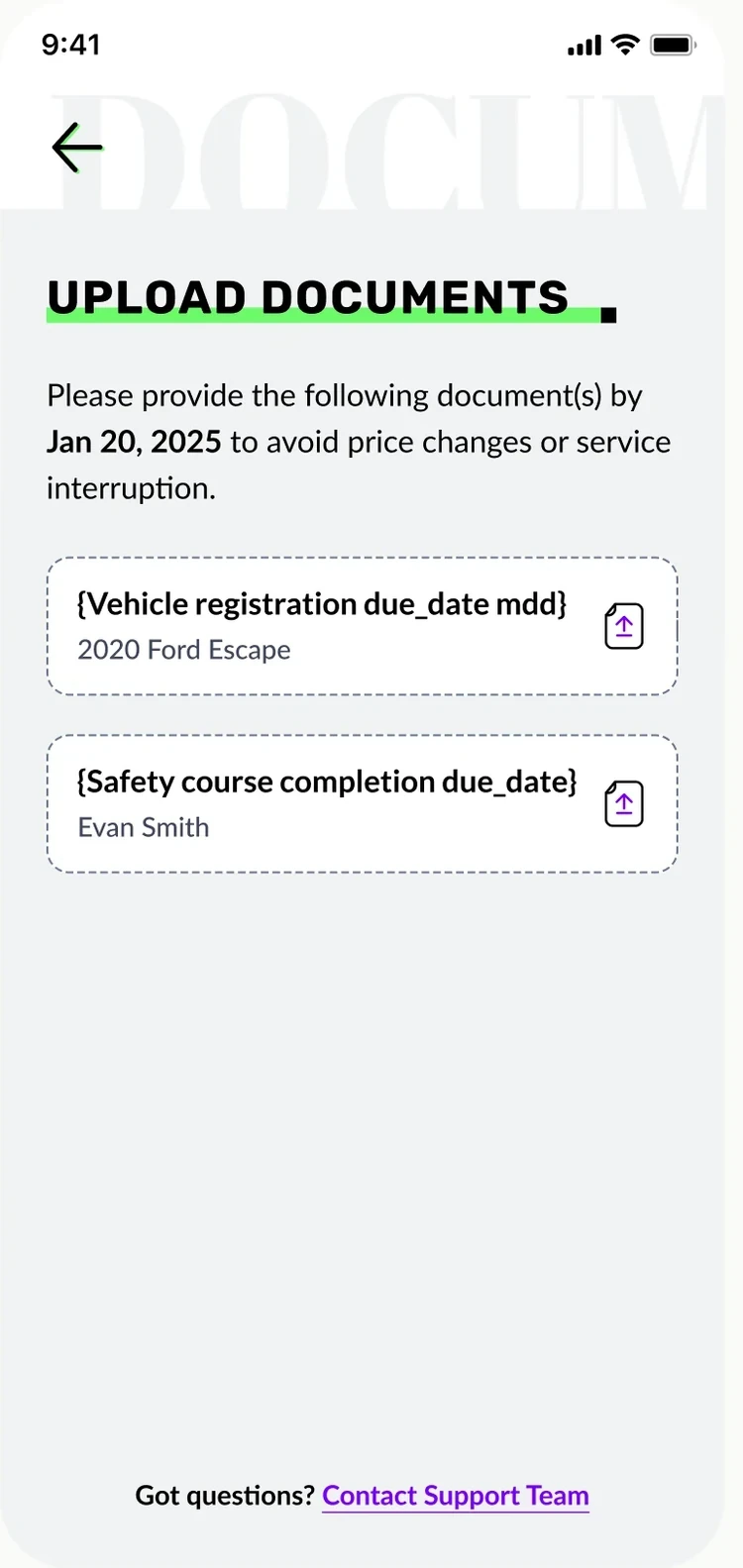
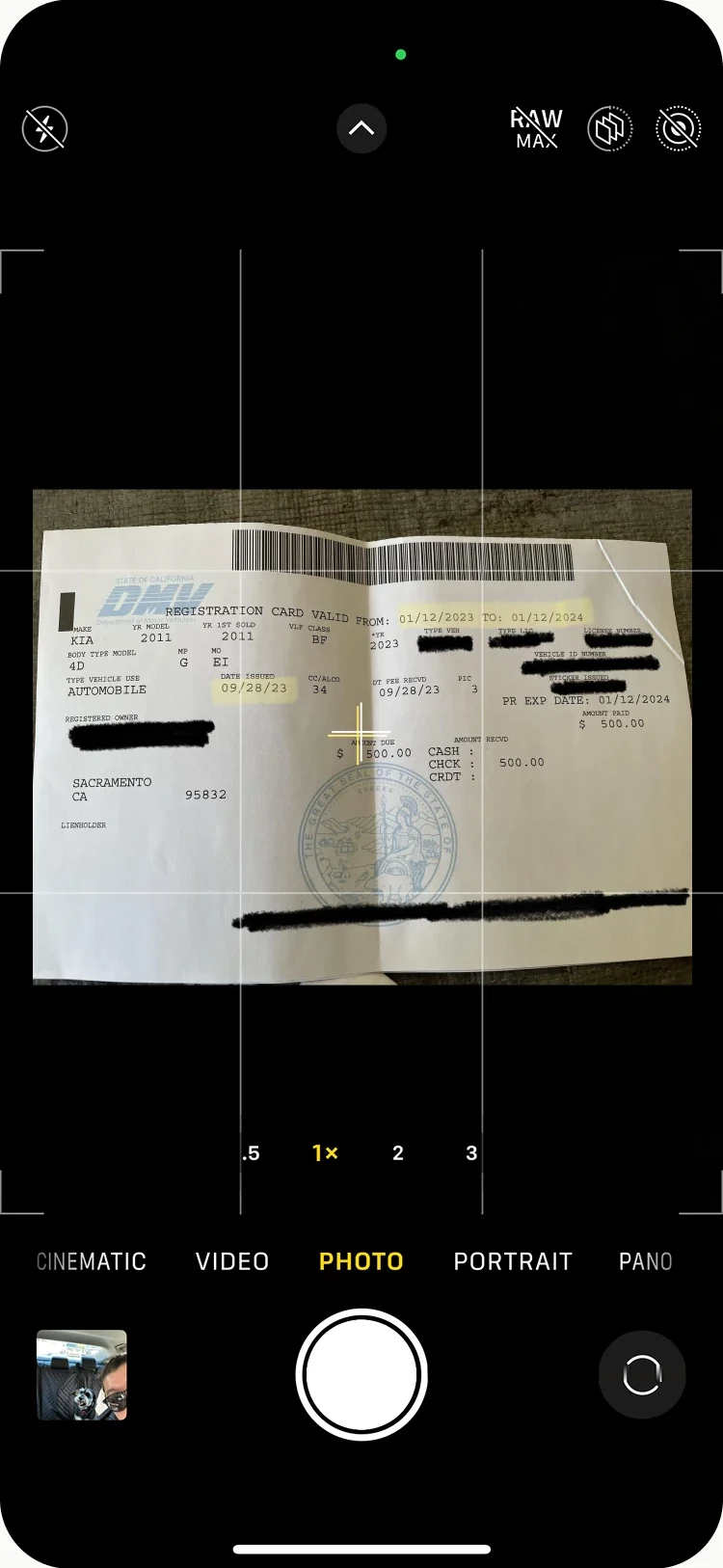
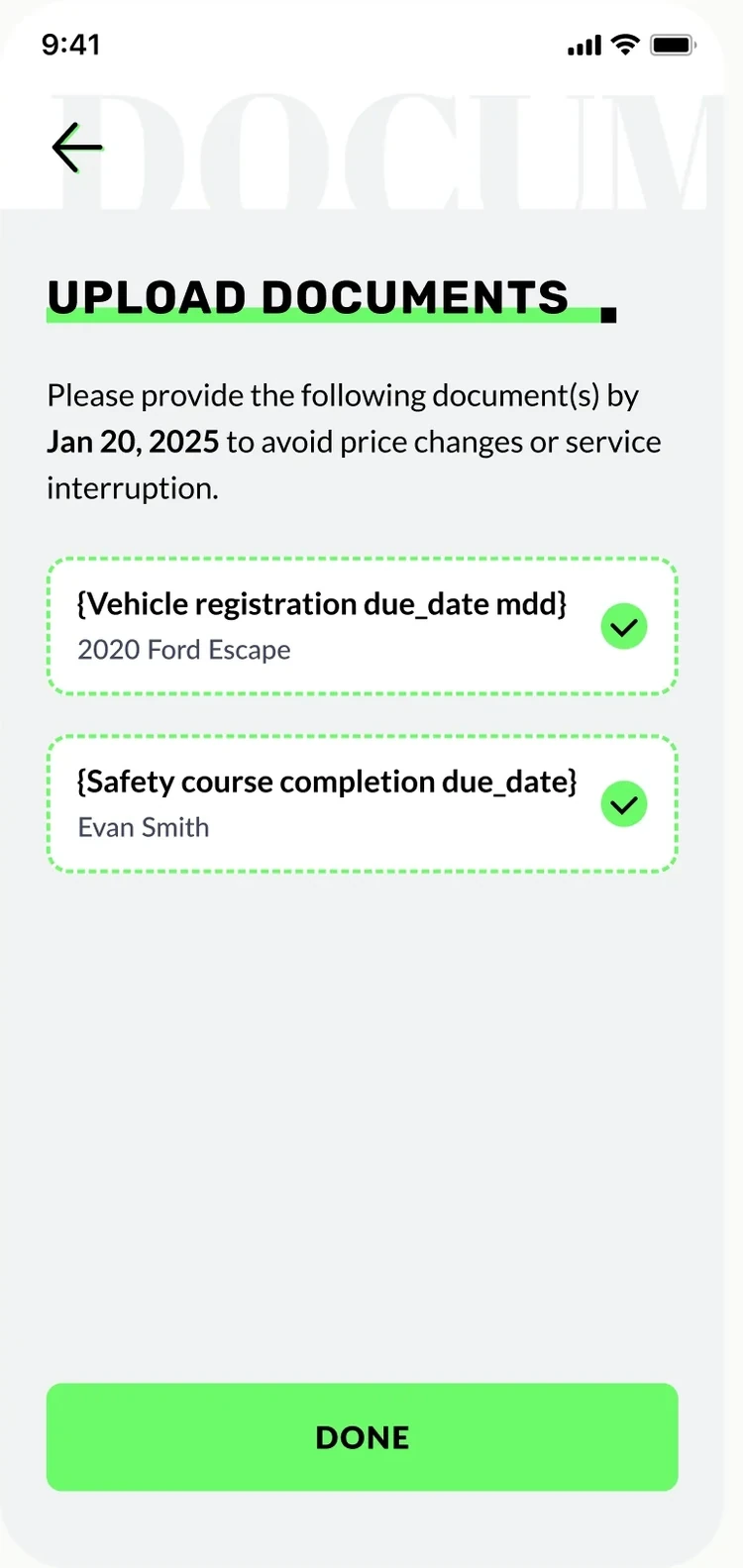
New customers need to provide supporting documents: vehicle photos, proof of prior insurance, driver license. Previously a rep collected them by email or phone after signup, and completion hovered in the low forties.
Building upload directly into onboarding, surfaced immediately after the app download, moved the task to when attention and motivation are highest.
- A customer service rep contacts the customer after signup, by phone or email
- Customer manually sends documents on their own
- No in-app prompt or guidance
- Momentum lost between signup and outreach
- Upload step presented immediately after app download
- In-app guided flow with clear instructions
- Task completed while intent is highest
- No waiting on a customer service rep's schedule
Timing is a design decision. The right task at the right moment often matters more than the task itself.
Multi-Driver Policy Setup
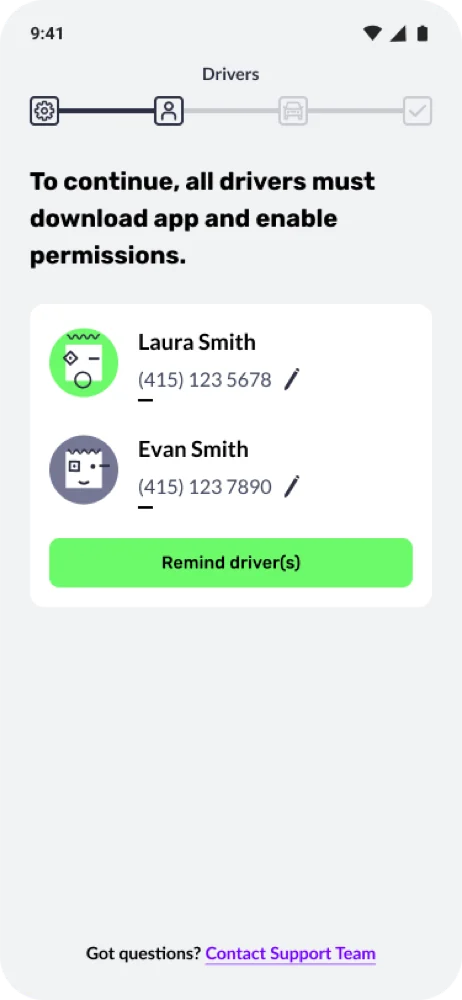
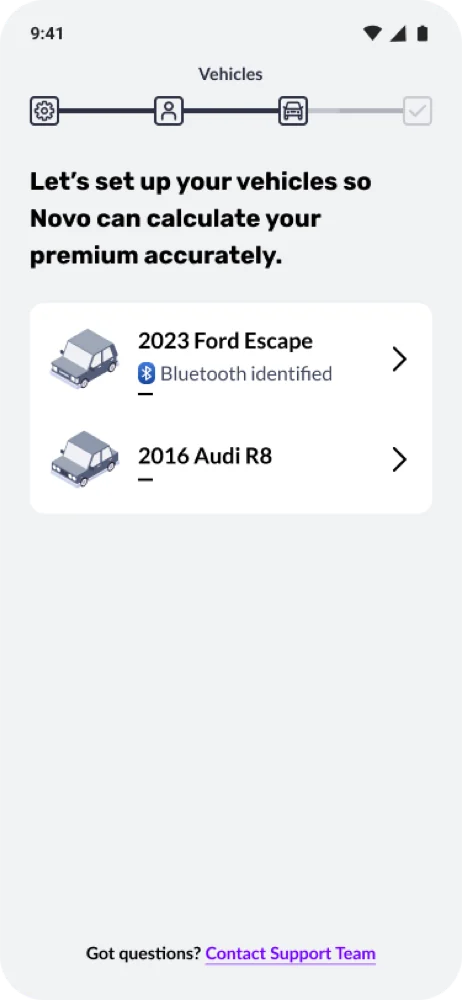
Every driver on a policy must install the app and pair it to a vehicle. For multi-driver households, completion collapsed, because you can't control what other people do: under 10% of multi-driver policies finished setup.
Reminders and notifications. We made the wording stronger, sent them more often, changed the timing, and tried new layouts, colors and bigger text. They worked for the primary driver, but nothing moved the other drivers on the plan.
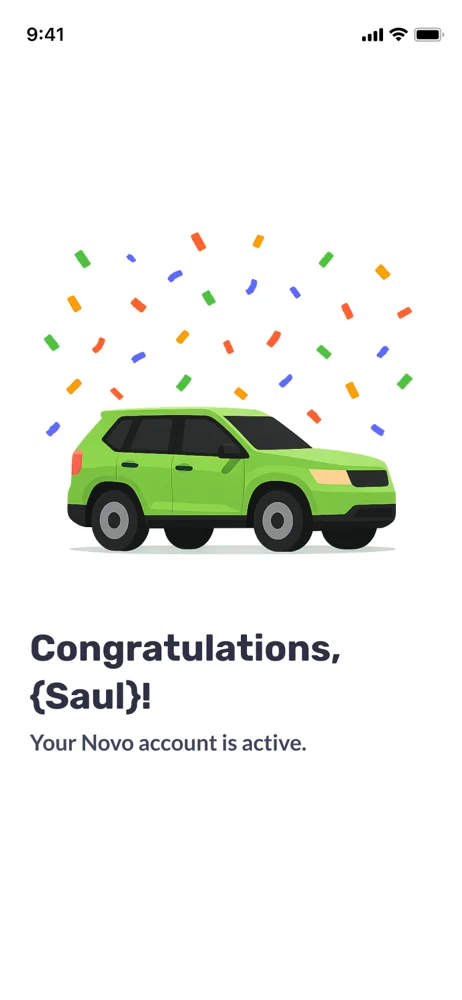
My redesign gated the value: the primary policyholder can't access their policy until every driver completes setup. Until then, the app opens on a screen waiting for the other drivers. That one change put direct, personal motivation to follow up exactly where it belongs.
Locking the policy raised concerns. But the alternative was worse: new drivers were churning because the other drivers never set up before the activation window ran out.
When you need several people to act, find the one with the most to lose and make sure they feel it. They will chase the others for you.
In-App Claims Filing
Filing a claim is one of the highest-stress moments a customer has with their insurer, and there was no in-app path: call or email, then wait.
I designed an end-to-end claims flow covering collision, glass, and comprehensive damage. It opens with an emergency triage step that confirms the customer is safe, then routes to a customer service rep or to self-service.
The self-service flow captures all necessary information:
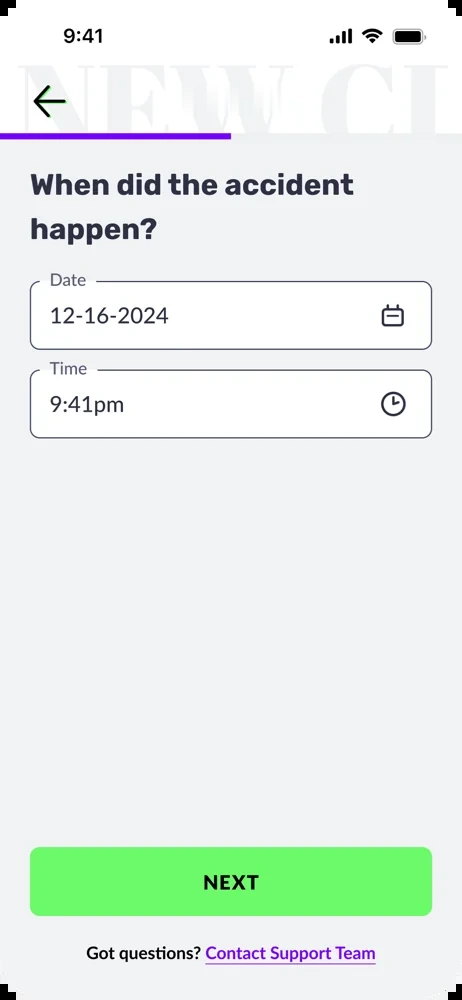
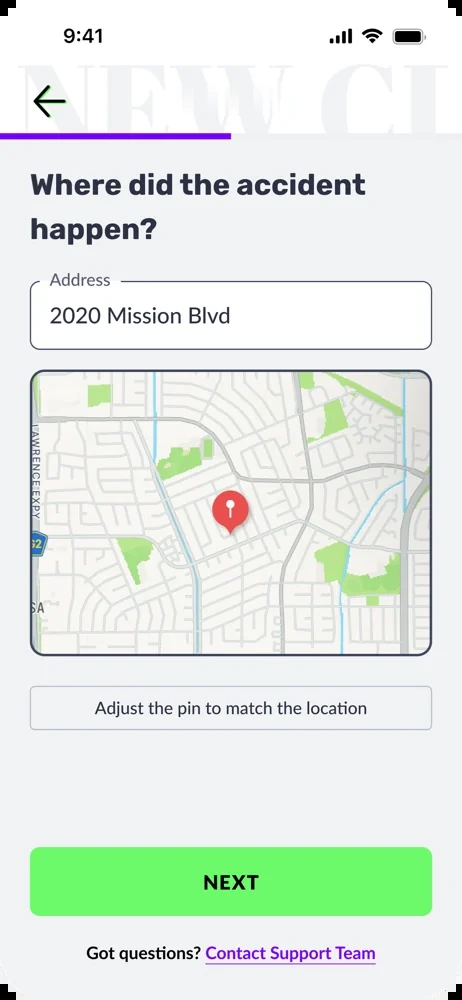
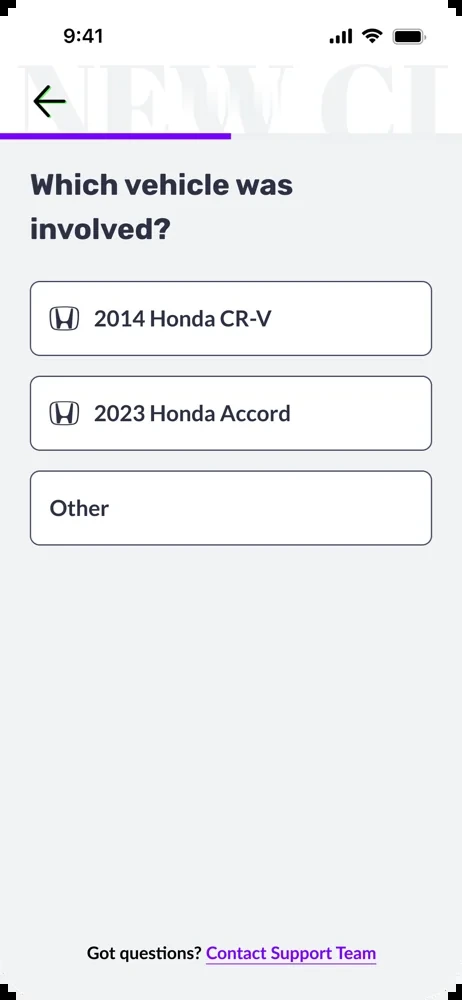
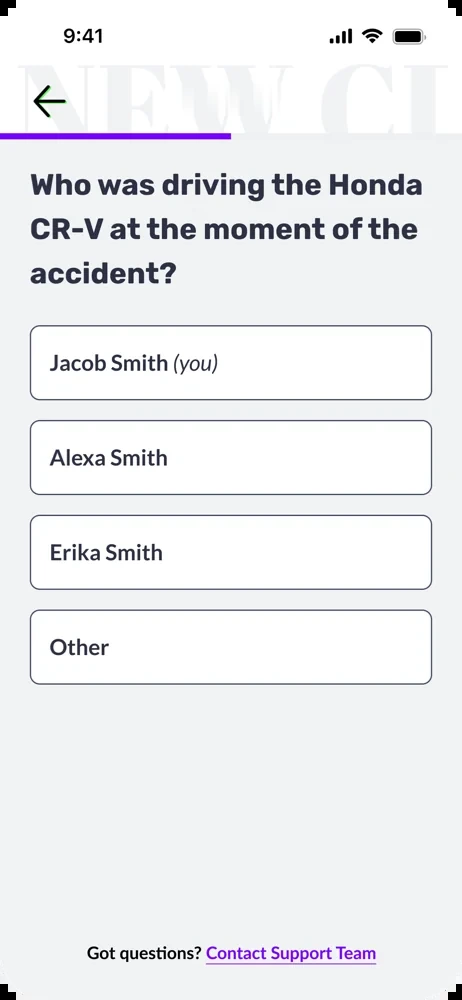
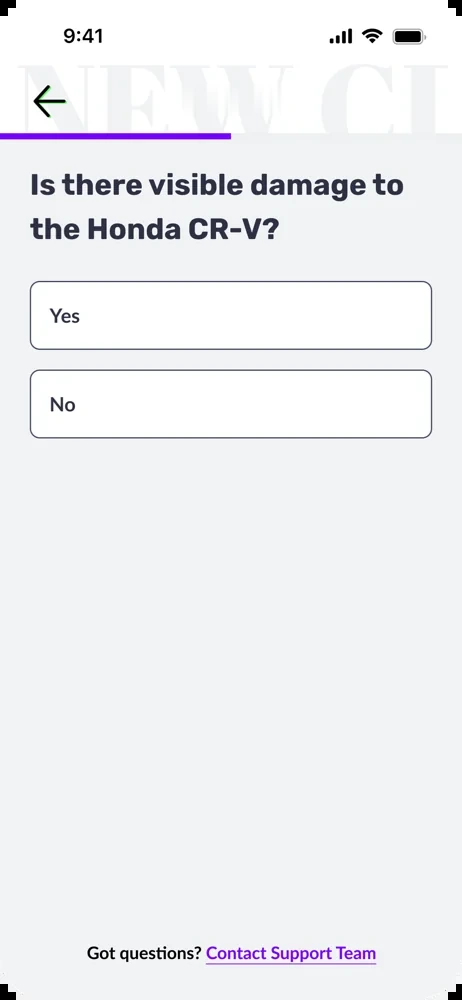
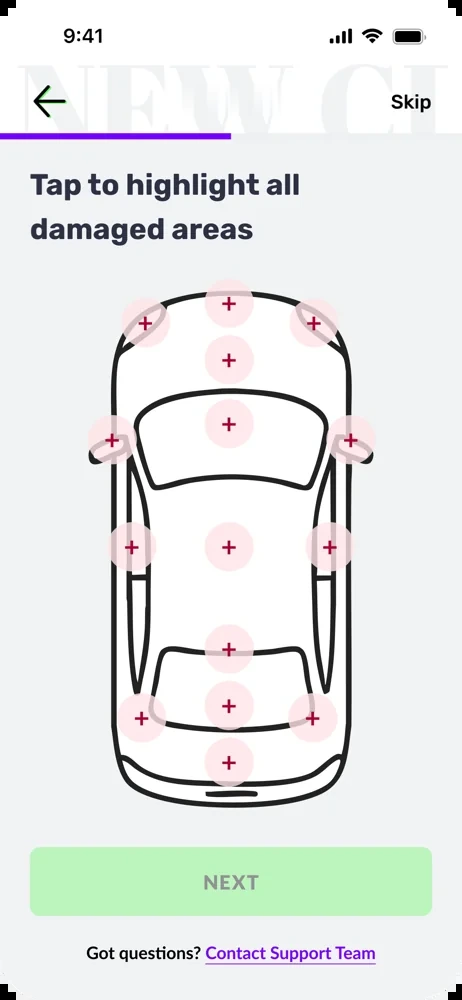
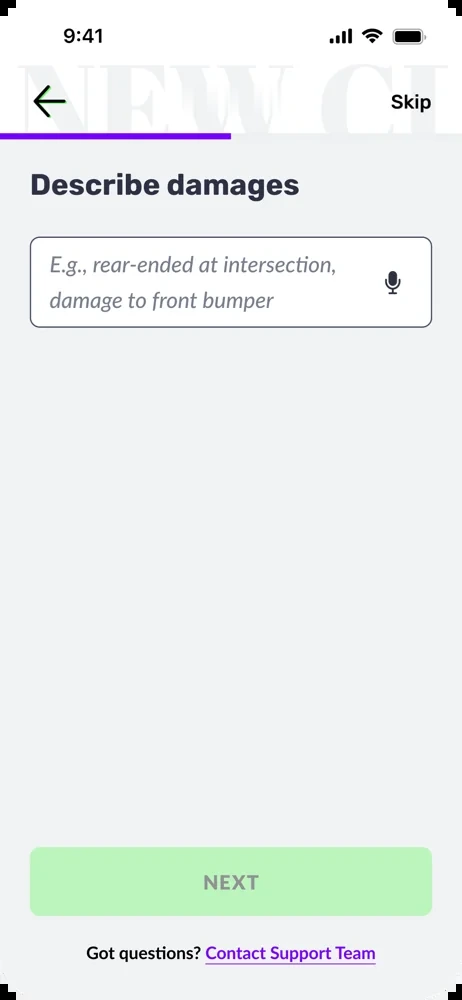
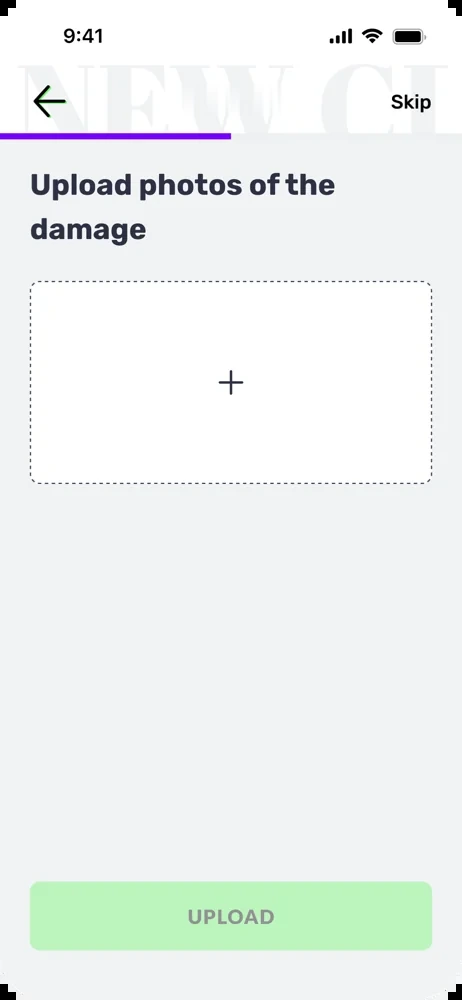
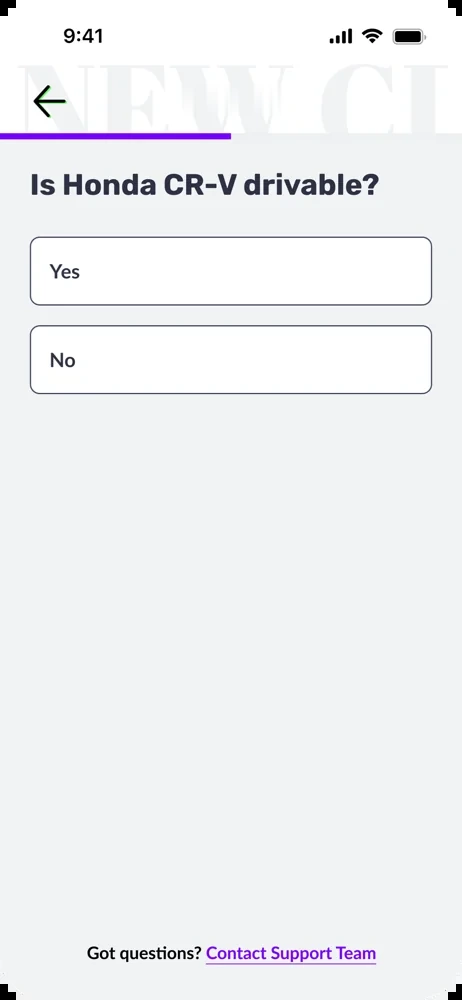
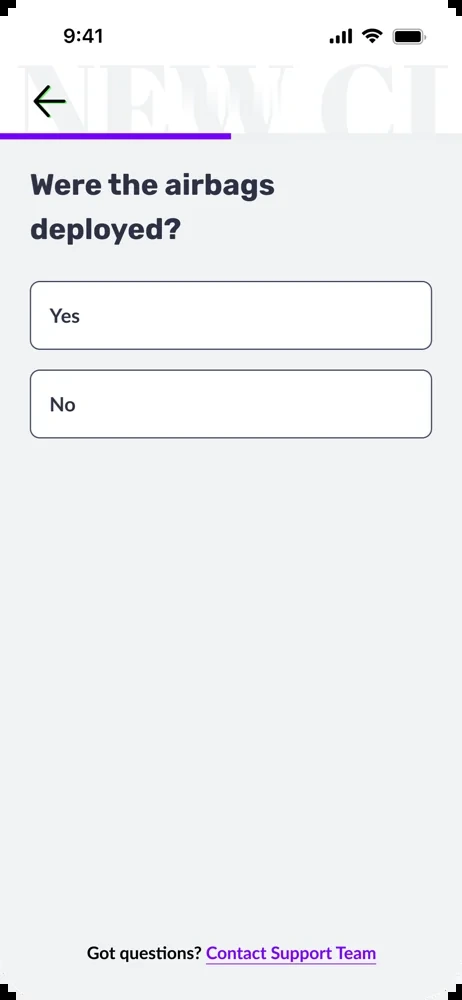
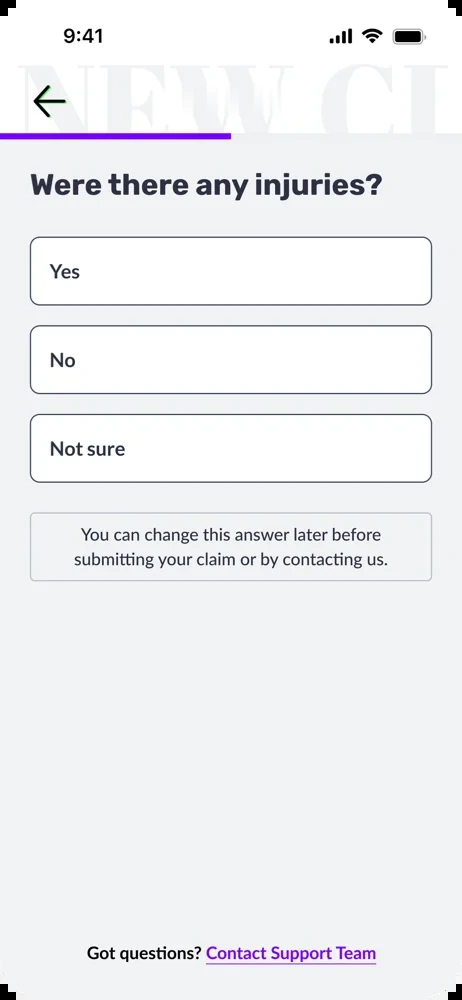
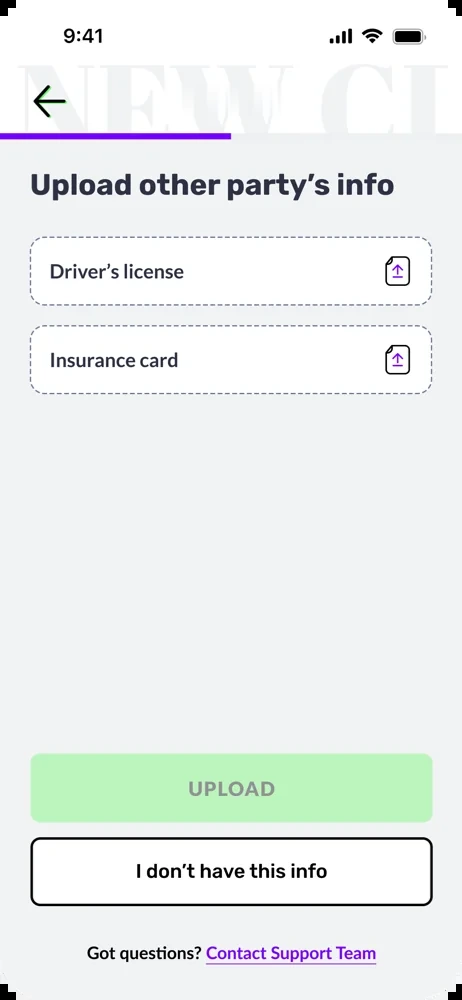
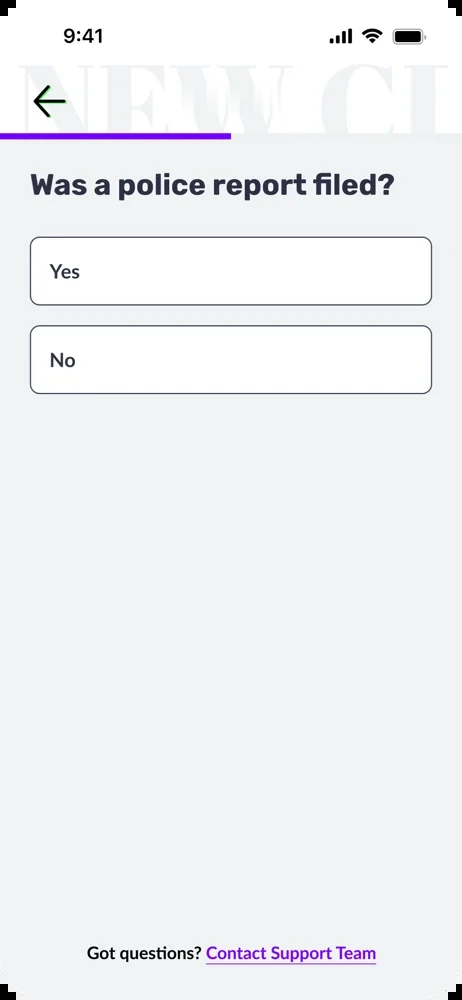
After submission, customers track claim status and an estimated resolution timeline in the app. The feature is designed and ready for launch.
In design reviews, customer service reps consistently reported these features cut their inbound volume of routine requests, freeing them for the issues that genuinely need human expertise.
A score that changes with every drive
There's no inherent reason to open an insurance app every day; most are opened reactively. The safety score creates a pull-based engagement loop: it updates with every drive, so customers have an ongoing reason to return.
Personalized coaching reinforces the loop. The more driving data accumulates, the more targeted the feedback, so people come back because it is useful, not because of made-up urgency.
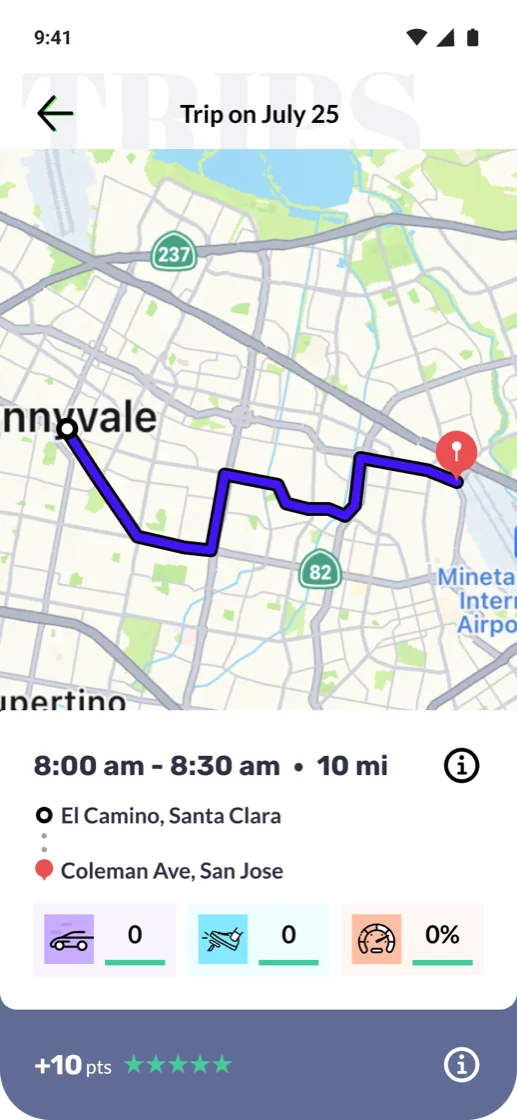
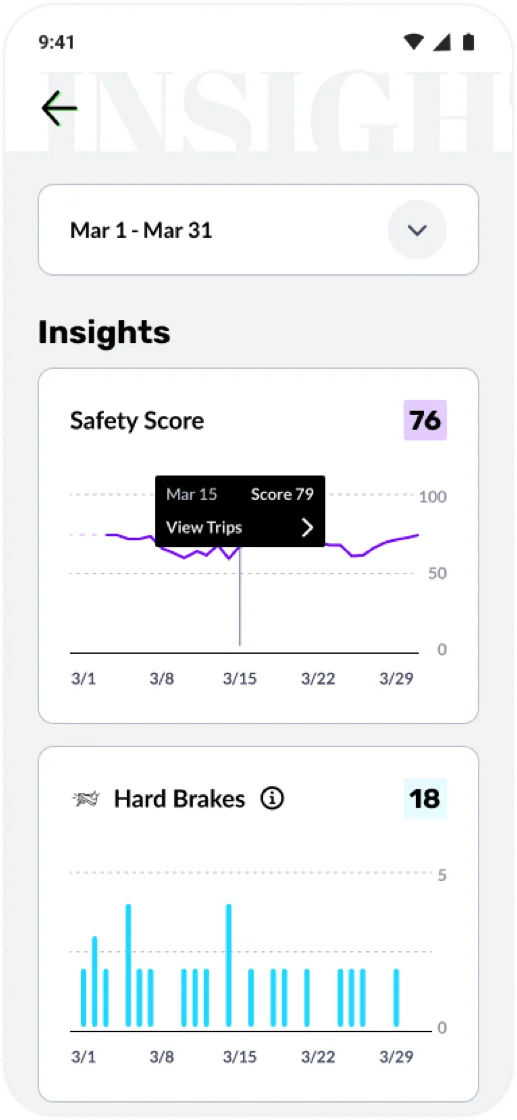
A score that changes every time you drive gives people a reason to check back. The stakes are real, the feedback is real, and there's a number to improve, so it keeps people around without feeling like a trick.
New driver churn fell from 25% to 5%
Each number comes from redesigning one step customers used to get stuck on.
What worked (and what I'd revisit)
The self-service model produced step-change improvements every time it was applied, consistent enough to become a design principle: if a task can be completed in-app, it should be. The safety score loop worked too, but mostly for customers who already drive safely.
Known Limitation
The experience is optimized for drivers who score well. For those who don't, it risks feeling punitive: a constant record of what they're doing wrong, pushing out the customers most in need of improvement.
The business model self-selects: better drivers stay, worse drivers churn. Workable short term, but not the vision. That's the challenge behind Good Miles: using positive reinforcement to retain the drivers who are struggling instead of letting the product push them away.